
Virtual Internship in Medicine, Healthcare and Medical Research

A two weeks of medicine intership for students in grades 8-12

7–18 November 2026

(Except 12th and 13th)

4:30 PM–6:30 PM
All timings in GST.
USD 600 + VAT
Program Fees
Grades 8-12
Eligibility
ONLINE
Venue
About the Program

What Is Medicine Virtual Internship?

This internship is an intensive two-week medical immersion for ambitious students curious about medicine, healthcare and medical research.

Think Like a Doctor: Explore How Modern Medicine Really Works

Explore clinical reasoning, genetics, neuroscience, medical research, communication, ethics and AI through real-world case studies and an immersive medical project.

Go Beyond Textbooks and Discover How Medicine Works in the Real World

Through clinical cases, interactive exercises, research and project work, students explore how doctors move from symptoms to diagnosis, how genetics and neuroscience inform clinical decisions, how medical evidence is evaluated, and how emerging technologies such as AI are transforming healthcare.

Students will explore:

  • Clinical reasoning and diagnostic thinking
  • Genetics and genomics
  • Neurology and neuroscience
  • Medical research and evidence evaluation
  • Patient communication
  • Medical ethics
  • AI and emerging healthcare technologies
  • Scientific presentation and communication


No prior medical knowledge is required.

Virtual Internship in Medicine, Healthcare and Medical Research

A JOURNEY FROM PATIENT TO DIAGNOSIS

The programme is designed as one connected learning journey rather than ten separate classes.

Week One: From Patient to Genome and Back
Students begin with a patient story and explore how symptoms, DNA, mutations, sequencing, genetics and neurological findings contribute to real-world diagnoses.

Week Two: Medicine Beyond the Diagnosis
The focus widens to patient communication, ethics, AI in medicine, medical careers and research, and how scientific discoveries and clinical evidence become real-world treatments.

At the centre of the programme are two essential skills: reasoning through a patient case and understanding the research evidence that informs clinical decisions.

This is your opportunity to showcase your diplomacy, leadership, and debate skills while competing for one of the conference’s most prestigious recognitions. Scholarship covers conference registration fees only. Travel, accommodation, visa, and related expenses remain the responsibility of the delegate.

WHAT MAKES THIS PROGRAMME UNIQUE?

Think Like a Doctor
Students learn how clinicians approach medical problems, moving from patient symptoms and clinical findings towards a reasoned diagnosis.

Work on a Clinical Case
Students work on a patient case throughout the programme, applying what they learn and developing their clinical reasoning step by step.

Explore Modern Medical Science
From DNA sequencing and genetics to neuroscience and polygenic risk scores, students discover the science driving modern medicine.

Communication & Medical Ethics
Students explore consent, confidentiality, uncertainty and challenging patient conversations, developing skills rarely introduced at school level.

AI & the Future of Medicine
Students discover how artificial intelligence is already being used in hospitals, how medical AI systems are developed, and the challenges surrounding evidence, regulation and implementation.

Understand Medical Research
Students learn how to search for clinical evidence, understand research papers and critically evaluate whether findings can meaningfully inform treatment.

Present Like a Clinician
Students conclude the programme by presenting their clinical case, diagnostic reasoning, treatment research and evaluation of the available evidence.


YOUR FINAL CLINICAL CASE PROJECT

Throughout the two weeks, students work collaboratively on a clinical case.

The project develops progressively alongside the programme. During Week One, students build the clinical reasoning leading from the patient’s presentation towards a diagnosis. During Week Two, they research an aspect of treatment and examine the evidence supporting it.

Students develop skills in:

  • Clinical reasoning
  • Evidence-based thinking
  • Medical research
  • Scientific communication
  • Teamwork
  • Leadership
  • Critical thinking
  • Presentation

The programme culminates in a final clinical case presentation where students explain their reasoning, evaluate research evidence and demonstrate how they handled uncertainty.
Mentors

MEET YOUR MENTOR

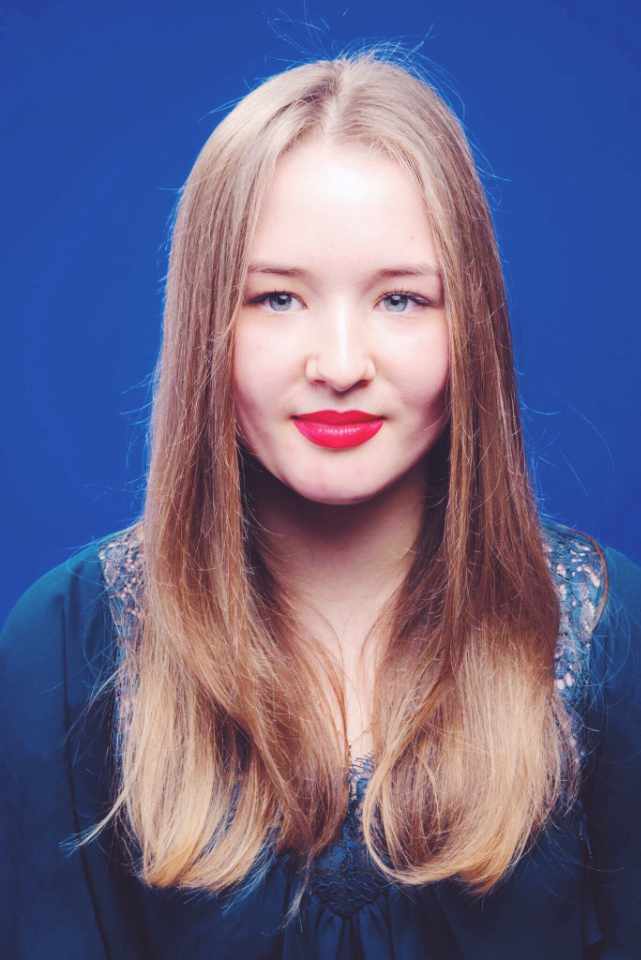
Dr Sophia H
Dr Sophia E. Hodgkinson
Physician-Researcher | Neurology, Neurosurgery & AI

Dr Sophia E. Hodgkinson grew up across five countries before earning her MD, with research undertaken at Harvard Medical School and King's College London spanning neurology, neurosurgery and AI.

Her work has covered areas including motor-eloquent glioma surgery, neuroimaging and artificial intelligence. Most recently, she worked as a Clinical Researcher at Hologen, a UCL/KCL neuro-AI startup, focusing on drug-development modelling and translational neuroimaging.

She has more than 3,000 hours of teaching and mentoring experience, including designing and leading her own two-week medicine course for seven cohorts at Oxford summer programmes.

A TEDx speaker, EAN Fellowship winner and former EdTech founder, she has been accepted to Stanford's 2027 M-TRAM programme and will continue her research alongside neurology training in Switzerland.

She particularly enjoys teaching students who are curious about medicine, science and where both fields are heading.

WHO SHOULD JOIN?

This programme is designed for Grades 8–12 students who are:

  • Considering medicine or healthcare as a future career
  • Interested in biology, neuroscience, genetics or AI
  • Looking to explore medicine beyond the school curriculum
  • Interested in medical research and evidence-based thinking
  • Preparing for competitive university applications
  • Looking to develop reasoning, research and presentation skills

No prior medical knowledge is required.

The Curriculum

PROGRAMME CURRICULUM

WEEK ONE: FROM PATIENT TO GENOME AND BACK

Welcome & Project Launch

Saturday, 7 November

  • Meet the mentor and fellow students
  • Understand how the two-week programme will work
  • Introduction to the clinical case project
  • Choose a case and begin identifying the key medical questions
  • Understand how the final presentation combines clinical reasoning with independent treatment research
  • Introduction to pathways across clinical medicine, academic research and emerging medical technology
WEEK ONE: FROM PATIENT TO GENOME AND BACK

Discovering & Understanding DNA

Sunday, 8 November

Students begin with a patient and move from the person, to the organ, to the cell and finally to the genome.

  • DNA structure
  • Replication
  • Transcription and translation
  • Types of genetic mutations
  • Sanger sequencing
  • Short-read sequencing
  • Nanopore sequencing
  • Sequencing reads and depth of coverage
  • Pathogenic and benign variants
  • Variants of uncertain significance
  • Computational prediction of genetic variant effects
  • The changing cost of genome sequencing

Students explore not simply what a genetic result says, but how that result was created and what it can reasonably tell us about a patient.

WEEK ONE: FROM PATIENT TO GENOME AND BACK

Academic Interview Skills

Monday, 9 November

Students explore how to communicate their academic interests, knowledge and research experience confidently.

  • Academic interview structure
  • Effective preparation
  • Common question types
  • Live interview practice
  • Responding when you don't know an answer
  • Explaining a research project clearly
  • Describing research methods without overstating your contribution
  • Communicating complex scientific ideas concisely
WEEK ONE: FROM PATIENT TO GENOME AND BACK

Human Genetics & Genomics

Tuesday, 10 November

Building directly on the DNA session, students explore what genetic information means for an individual patient and their family.

  • Penetrance and expressivity
  • Why carrying a genetic variant does not necessarily mean developing a disease
  • Patterns of inheritance
  • Understanding pedigrees
  • Polygenic risk scores
  • Limitations of genetic risk prediction across populations
  • Genetic counselling
  • Predictive genetic testing
  • Huntington's disease
  • APOE and understanding genetic risk

The session also prepares students for a critical medical question explored during Week Two: how should potentially life-changing information be communicated to a patient?

WEEK ONE: FROM PATIENT TO GENOME AND BACK

Neurology Case Study

Wednesday, 11 November

Students work through a complex neurological case in real time as a model for approaching their own clinical cases.

Using lateral medullary syndrome, also known as Wallenberg syndrome, students examine findings including:

  • Crossed sensory loss
  • Horner's syndrome
  • Dysphagia
  • Preserved motor power

Clinical information is revealed progressively, allowing students to narrow their differential diagnosis as a doctor would.

Students also explore:

  • Neurological localisation
  • How clinical findings guide diagnosis
  • Why an initial CT scan may appear normal
  • How imaging results should be interpreted
  • Which findings can change immediate clinical management
WEEK TWO: COMMUNICATION, ETHICS & THE FUTURE OF MEDICINE

The Future of Medicine

Saturday, 14 November

Students explore where artificial intelligence is already being used in clinical medicine rather than simply where it may be used in the future.

  • Imaging triage
  • Diabetic retinal screening
  • Ambient clinical documentation
  • How medical AI systems are trained
  • Why an AI model may perform differently between hospitals
  • Medical device regulation
  • Challenges surrounding continuously learning algorithms
  • Clinical validation
  • Retrospective studies versus patient outcome trials
  • Foundation models in healthcare
  • Drug-development modelling
  • Translational neuroimaging
  • How medical AI moves from research into a real product
WEEK TWO: COMMUNICATION, ETHICS & THE FUTURE OF MEDICINE

Day in the Life: Guest Q&A

Sunday, 15 November

An interactive guest session giving students an opportunity to ask questions and gain first-hand insights into medical, academic and professional pathways.

WEEK TWO: COMMUNICATION, ETHICS & THE FUTURE OF MEDICINE

Communication & Ethics

Monday, 16 November

Students explore one of the most important aspects of medicine: communicating difficult information while navigating ethical responsibilities.

Communication topics include:

  • Structured patient communication
  • Consent
  • Communicating uncertainty
  • Breaking bad news
  • First-seizure scenarios
  • Communicating a new diagnosis of multiple sclerosis

Ethics topics include:

  • Capacity
  • Best interests
  • Confidentiality
  • Ownership of medical and genetic information
  • Predictive genetic information
  • Responsibilities towards patients and their relatives

Students work through real-world scenarios rather than studying ethical principles only in the abstract.

WEEK TWO: COMMUNICATION, ETHICS & THE FUTURE OF MEDICINE

Careers & Research

Tuesday, 17 November

Students explore both the realities of clinical medicine and the opportunities available beyond conventional medical practice.

  • Medical training in the UK
  • The realities of working as a doctor
  • Clinical hierarchies and working environments
  • Academic medicine
  • How medical research projects begin
  • How scientific papers are written and reviewed
  • Finding research supervisors
  • Working in industry
  • Healthcare startups
  • Practising medicine internationally
  • Translational research
  • Building a career that combines medicine and research
WEEK TWO: COMMUNICATION, ETHICS & THE FUTURE OF MEDICINE

Final Presentations & Certificates

Wednesday, 18 November

Students present their chosen clinical cases, demonstrating how they reasoned from the patient's story towards a diagnosis before presenting their independent research into an aspect of treatment.

Students are encouraged to consider:

  • Quality of clinical reasoning
  • Use of scientific evidence
  • Handling of uncertainty
  • Research methodology
  • Trial phases
  • Comparators
  • Study sample sizes
  • Clinical endpoints
  • Whether research outcomes are genuinely meaningful for patients

The programme concludes with feedback, reflections and certificates.

READY TO EXPLORE MEDICINE?

Experience two weeks of immersive, expert-led learning and discover how doctors think, researchers investigate and emerging technologies are transforming healthcare.