ONLINE HUMAN RIGHTS LAW PROGRAMME
A Two-Week Interactive Exploration of International Human Rights Law
(Except 12th and 13th)
What Is the Online Human Rights Law Programme?
The Online Human Rights Law Programme is an interactive two-week introduction to the foundations, challenges and evolving landscape of international human rights law.
Explore How Human Rights Are Protected, Challenged and Debated Around the World
Step into the world of international law through real-world cases, debates, negotiations and an immersive Model United Nations simulation.
Through lectures, debates, case studies and collaborative activities, students investigate how human rights are created, protected, enforced and contested around the world.
At the heart of the programme is a Model United Nations simulation centred around a fictional human rights crisis in Sealand.
Students analyse international law, represent competing perspectives, negotiate solutions, draft resolutions and present their proposals in a culminating debate.


WHAT WILL STUDENTS EXPLORE?
Foundations of Human Rights
Discover how the modern international human rights system developed and explore the historical events that shaped it.
International Human Rights Protection
Explore how international institutions, treaties, courts and other mechanisms seek to protect fundamental rights.
International Criminal Law
Understand the role of the International Criminal Court and examine how individuals can be held accountable for serious international crimes.
NGOs & Advocacy
Discover how non-governmental organisations investigate abuses, document evidence and influence governments and international institutions.
Rights, Culture & Universality
Debate one of the biggest questions in human rights law: Can human rights truly be universal?
Contemporary Global Challenges
Explore how human rights law responds to issues including conflict, migration, surveillance, artificial intelligence, digital rights and climate change.
YOUR FINAL PROJECT
Model United Nations Human Rights Crisis
A central feature of the programme is a fictional human rights crisis in the nation of Sealand.
Throughout the two weeks, students work collaboratively to investigate the crisis from legal, diplomatic and public-policy perspectives. Each group develops its own legal, policy and diplomatic response to the fictional Sealand human rights crisis.
Students will:
- Represent competing international perspectives
- Investigate relevant international law
- Develop legal and policy arguments
- Negotiate with other groups
- Build diplomatic positions
- Draft proposals and resolutions
- Participate in a formal Model United Nations debate
- Vote on a final resolution
Daily sessions progressively help students strengthen their:
- Legal reasoning
- Diplomacy
- Negotiation
- Public speaking
- Research
- Policy analysis
- Critical thinking
- Teamwork

The final presentations and Model UN debate allow students to apply these skills in a structured international crisis simulation.
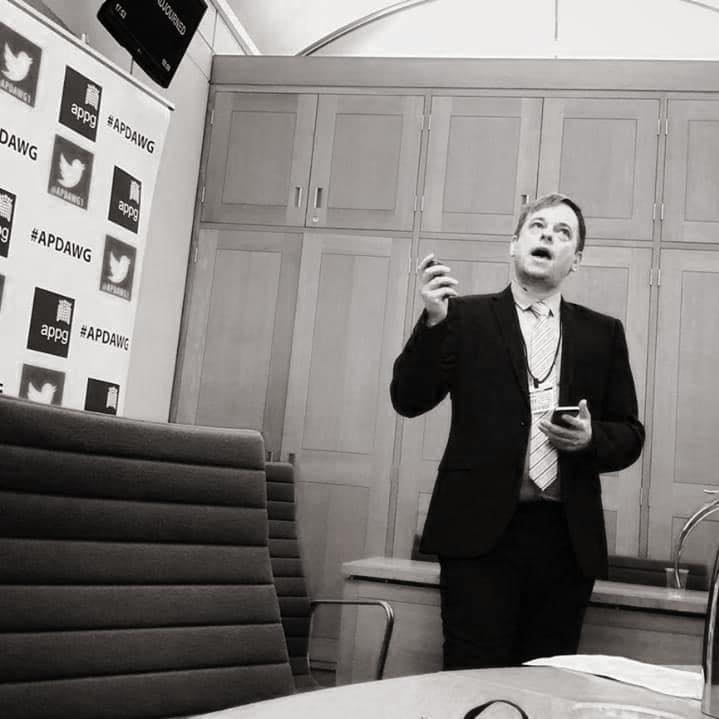
Meet Your Mentor

Gavin graduated with a law degree from Magdalen College, Oxford and was called to the Bar in 2007.
He has since worked as a legal representative in immigration and human rights law and is currently dual-qualifying as a solicitor.
Alongside his legal practice, he has completed postgraduate study across law-related areas including criminal psychology, international human rights, social policy and animal welfare law.
His professional and academic interests include:
- International human rights law
- Immigration law
- Criminal justice
- Animal rights law
- Social policy
- Space law
His combination of practical legal experience and academic study gives students the opportunity to understand not only the theory behind international human rights law, but how legal principles operate in practice.
Who Should Join?
This programme is designed for Grades 8–12 students who are:
- Interested in law, politics or international relations
- Curious about international human rights
- Considering law as a future degree or career
- Interested in diplomacy or Model United Nations
- Passionate about global affairs and public policy
- Looking to strengthen research and critical-thinking skills
- Interested in developing public-speaking and debating skills
- Preparing for competitive university applications
No prior legal knowledge is required.
PROGRAMME CURRICULUM
Project Introduction: Model United Nations Debate
Saturday, 7 November
Students are introduced to the fictional Sealand human rights crisis that will form the central project for the programme.
Topics and activities include:
- Introduction to the Sealand crisis
- Overview of the Model UN format
- Understanding the roles of states, NGOs and international organisations
- Identifying key legal questions
- Identifying public-policy challenges
- Project group formation
- Initial research and position-building
Historical Milestones in Human Rights Law Development
Sunday, 8 November
Students explore how modern human rights law emerged and the political and historical events that influenced its development.
Topics include:
- Philosophical roots of human rights
- Historical developments that shaped modern human rights law
- Creation of the United Nations
- Universal Declaration of Human Rights
- International Covenant on Civil and Political Rights
- International Covenant on Economic, Social and Cultural Rights
- CEDAW
- Convention on the Rights of the Child
- How global conflicts shaped international protections
- Post-WWII justice and the emergence of the modern international human rights system
How Are International Human Rights Enforced?
Monday, 9 November
Students investigate what happens when states violate international human rights standards and why international enforcement can be difficult.
Topics include:
- International institutions responsible for human rights protection
- UN Human Rights Council
- UN treaty bodies
- Special rapporteurs
- Regional human rights systems
- European Court of Human Rights
- Inter-American human rights system
- African human rights system
- State accountability
- Political barriers to enforcement
- State non-compliance
- Limitations of international enforcement mechanisms
Key Cases Before the International Criminal Court
Tuesday, 10 November
Students explore the relationship between serious human rights violations and international criminal law.
Topics include:
- What constitutes an international crime?
- Genocide
- War crimes
- Crimes against humanity
- Individual criminal responsibility
- Jurisdiction of the International Criminal Court
- Landmark cases
- Evidence and international criminal proceedings
- How international verdicts can influence global justice
Students examine how legal principles are applied when assessing responsibility for serious international crimes.
The Role of NGOs in International Human Rights
Wednesday, 11 November
Students investigate how non-governmental organisations contribute to human rights protection around the world.
Topics include:
- Investigating human rights abuses
- Gathering and documenting evidence
- Human rights reporting
- Advocacy strategies
- Public campaigning
- Influencing governments
- Working with international institutions
- NGO legitimacy
- Authority and accountability
- NGO involvement in major human rights crises
A Day in the Life of an Oxbridge Student + Q&A
Saturday, 14 November
Students gain insight into academic and student life at Oxford and Cambridge.
Topics include:
- Academic life at Oxford and Cambridge
- Student life
- University study routines
- Application processes
- Interview experiences
- Preparing for highly selective universities
- Q&A with a current Oxbridge student
How Universal Is the Universal Declaration of Human Rights?
Sunday, 15 November
Debate Session
Students investigate one of the most important debates in international human rights law.
Topics include:
- Can human rights truly be universal?
- Universalism versus cultural relativism
- State sovereignty
- International human rights norms
- Cultural and political differences
- Applying universal standards across different societies
- Case studies from different global contexts
The session culminates in a group debate:
Are universal human rights genuinely achievable?
Academic Interview Skills for Oxbridge
Monday, 16 November
Students explore the academic interview process and practise communicating analytical thinking clearly.
Topics include:
- Understanding the Oxbridge interview format
- What academic interviewers look for
- Demonstrating critical thinking
- Approaching unfamiliar questions
- Preparing effectively
- Live practice questions
- Individual and group feedback
- Communicating ideas clearly under pressure
Biggest Challenges for International Human Rights Law Today
Tuesday, 17 November
Students examine some of the most pressing challenges affecting human rights law in the modern world.
Topics include:
- Armed conflict
- Humanitarian crises
- Migration and refugees
- Border politics
- National security and civil liberties
- AI and surveillance
- Digital rights
- Climate change
- Environmental justice
- Effectiveness of international protections
- Contemporary human rights case studies
Students consider not only what rights exist, but whether international institutions can effectively protect those rights when faced with political, technological and global challenges.
Final Project: Model United Nations Debate
Wednesday, 18 November
The programme culminates in a formal Model United Nations simulation based on the fictional Sealand human rights crisis.
Students:
- Represent competing positions
- Present legal and policy arguments
- Negotiate proposals
- Respond to opposing perspectives
- Draft resolutions
- Participate in formal debate
- Work towards diplomatic compromises
- Vote on a final resolution
The programme concludes with feedback, closing reflections and certificates.
READY TO EXPLORE INTERNATIONAL HUMAN RIGHTS LAW?
Join ambitious students for two weeks of interactive, expert-led learning and discover how international law, diplomacy and global institutions respond to some of the world's most complex human rights challenges.